

214.651.6100  Call or Text Now

Grain Bin & Silo Entrapment Accidents

Dallas Silo Entrapment Lawsuit Lawyer

Have you lost a loved one in a grain entrapment accident? Call the Texas farm injury lawyers at Rasansky | McKenzie Law today.

Dallas Silo Entrapment Lawsuit Lawyer

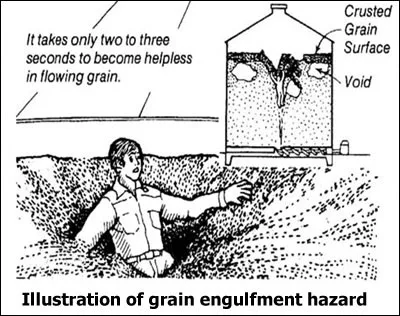
Illustration of a grain engulfment hazard.

While many grain storage facilities operate on a daily basis without incident, these type of accidents still occur far too often. What’s worse is that the majority of preventable accidents involving silos and/or grain elevators are fatal. There is no margin of error when it comes to working in such an inherently dangerous environment, and employers know this.

In fact, due to the sheer number of wrongful death accidents occurring in grain bins, elevators and silos, the U.S. Labor Department has implemented rules that specifically prohibit children under the age of 16 from working in certain commercial silos and grain bins.

Suffocation: a preventable accident.

In addition to grain dust explosions, one of the big problems with silo accidents is suffocation. Anyone who becomes trapped in a grain bin or silo can easily succumb to suffocation. The most common materials that lead to these types of accidents are sorghum, livestock feed, yellow corn, and cottonseed. In most cases, grain entrapment occurs when the worker is attempting to loosen frozen or spoiled grain. Another way this can happen is when a worker attempts to walk on top of the grain “bridge” thinking it can withstand their weight. The grain can then crumble and result in the worker being engulfed in the bin and suffocating.

Fortunately, the majority of silo accidents that result in suffocation are completely preventable. Unfortunately, some employers still place profits and convenience over the safety of their workers. It’s easy enough to prevent work accidents when both the workers and management incorporate and implement basic training and make use of effective safety equipment. Some of the safety measures employers can follow to prevent accidents and death include:

Texas Grain Bin Accident Attorney

Examples of Silo Entrapment Accidents

  • Turn off and lock out all powered equipment associated with the bin, including augers, before entering.
  • Prohibit “walking down” the grain (where an employee walks on grain to make it flow).
  • Provide employees with a body harness and lifeline, ensuring that the line is secured.
  • Have an observer stationed outside the bin or silo being entered by an employee, who’s only task is to continuously track the safety of the employee.
  • Train all workers for the specific hazardous work operations they are to perform when entering and working inside of grain bins.
  • Test the air for the presence of combustible and toxic gases within a silo prior to entrance in order to prevent grain dust explosions.

When these things are not followed and someone is killed or seriously injured as a result, the employer could face a personal injury lawsuit.

Reports of silo accidents.

In Lancaster County, Pennsylvania, a 24-year-old man was putting grain into a silo when he made the decision to check whether the silo was filling evenly. The worker attempted to accomplish this by climbing a ladder on the outside of the silo and entering the silo by way of a ladder on the inside. Methane gas overwhelmed him and he collapsed. The man died after co-workers were unable to reach him safely. His death was caused by asphyxia related to methane gas exposure.

A 49-year-old man from Houston, Texas died in Marietta, Georgia after he became trapped in a concrete silo. The accident happened at the Thomas Concrete Company plant in that city. Authorities said the accident occurred when two workers were performing repair work inside the silo. The man lost his footing, became entrapped in hundreds of pounds of gravel and was killed.

These are just two examples, and are quite typical of the types of accidents that can occur when working in silos. If a loved one has been injured or killed in a Texas silo accident, our firm can help you obtain the compensation to which your family is entitled. Our experienced personal injury lawyers can work with you to help determine your best course of action, and we do this for no up-front cost. For a free consultation, send us an email or call our office 24/7 at (214) 651-6100. We’ll explain the options available to you for no cost.

Speak With a Dallas Personal Injury Lawyer For Free

The attorneys at Rasansky | McKenzie Law are happy to speak to you about your potential case free of charge. If we can help with your claim, we’ll do so for no out-of-pocket cost to you. Call us 24/7 at (214) 651-6100.

REQUEST A FREE CONSULTATION TODAY!
Dallas Silo Entrapment Lawsuit Lawyer
Grain Bin & Silo Entrapment Accidents

Have you lost a loved one in a grain entrapment accident? Call the Texas farm injury lawyers at Rasansky | McKenzie Law today.

Silos come in many different shapes and sizes (including tower silos, bunker silos, and bag silos), each of which creates significant dangers to Texas farm workers. The bins are most-often filled with various types of grains, wheat, corn, and soybeans, but can also hold coal, cement, woodchips, food products and sawdust.

Dallas Silo Entrapment Lawsuit Lawyer

Illustration of a grain engulfment hazard.

While many grain storage facilities operate on a daily basis without incident, these type of accidents still occur far too often. What’s worse is that the majority of preventable accidents involving silos and/or grain elevators are fatal. There is no margin of error when it comes to working in such an inherently dangerous environment, and employers know this.

In fact, due to the sheer number of wrongful death accidents occurring in grain bins, elevators and silos, the U.S. Labor Department has implemented rules that specifically prohibit children under the age of 16 from working in certain commercial silos and grain bins.

Suffocation: a preventable accident.

In addition to grain dust explosions, one of the big problems with silo accidents is suffocation. Anyone who becomes trapped in a grain bin or silo can easily succumb to suffocation. The most common materials that lead to these types of accidents are sorghum, livestock feed, yellow corn, and cottonseed. In most cases, grain entrapment occurs when the worker is attempting to loosen frozen or spoiled grain. Another way this can happen is when a worker attempts to walk on top of the grain “bridge” thinking it can withstand their weight. The grain can then crumble and result in the worker being engulfed in the bin and suffocating.

Fortunately, the majority of silo accidents that result in suffocation are completely preventable. Unfortunately, some employers still place profits and convenience over the safety of their workers. It’s easy enough to prevent work accidents when both the workers and management incorporate and implement basic training and make use of effective safety equipment. Some of the safety measures employers can follow to prevent accidents and death include:

Texas Grain Bin Accident Attorney

Examples of Silo Entrapment Accidents

  • Turn off and lock out all powered equipment associated with the bin, including augers, before entering.
  • Prohibit “walking down” the grain (where an employee walks on grain to make it flow).
  • Provide employees with a body harness and lifeline, ensuring that the line is secured.
  • Have an observer stationed outside the bin or silo being entered by an employee, who’s only task is to continuously track the safety of the employee.
  • Train all workers for the specific hazardous work operations they are to perform when entering and working inside of grain bins.
  • Test the air for the presence of combustible and toxic gases within a silo prior to entrance in order to prevent grain dust explosions.

When these things are not followed and someone is killed or seriously injured as a result, the employer could face a personal injury lawsuit.

Reports of silo accidents.

In Lancaster County, Pennsylvania, a 24-year-old man was putting grain into a silo when he made the decision to check whether the silo was filling evenly. The worker attempted to accomplish this by climbing a ladder on the outside of the silo and entering the silo by way of a ladder on the inside. Methane gas overwhelmed him and he collapsed. The man died after co-workers were unable to reach him safely. His death was caused by asphyxia related to methane gas exposure.

A 49-year-old man from Houston, Texas died in Marietta, Georgia after he became trapped in a concrete silo. The accident happened at the Thomas Concrete Company plant in that city. Authorities said the accident occurred when two workers were performing repair work inside the silo. The man lost his footing, became entrapped in hundreds of pounds of gravel and was killed.

These are just two examples, and are quite typical of the types of accidents that can occur when working in silos. If a loved one has been injured or killed in a Texas silo accident, our firm can help you obtain the compensation to which your family is entitled. Our experienced personal injury lawyers can work with you to help determine your best course of action, and we do this for no up-front cost. For a free consultation, send us an email or call our office 24/7 at (214) 651-6100. We’ll explain the options available to you for no cost.

Speak With a Dallas Personal Injury Lawyer For Free

The attorneys at Rasansky | McKenzie Law are happy to speak to you about your potential case free of charge. If we can help with your claim, we’ll do so for no out-of-pocket cost to you. Call us 24/7 at (214) 651-6100.

REQUEST A FREE CONSULTATION TODAY!
About the Author
Anyone can hire a lawyer, but if you want to give yourself the best possible chance at success, call the experienced attorneys at Rasansky McKenzie. You only get one chance to bring your case before a court. Let them put their expertise to work for you.
© 2026 Rasansky | McKenzie Law
Attorney Advertising
Website developed in accordance with Web Content Accessibility Guidelines 2.2.
If you encounter any issues while using this site, please contact us: 214.651.6100
214.651.6100  Call or Text Now